AI brand compliance, built into the workflow
In Brand Asset, brand compliance means that every AI image request is shaped by your own brand guidelines and checked against them before the image is generated, not reviewed by eye afterwards.

What is a brand asset?
A brand asset is any element that makes your brand recognisable: the logo, colours, typefaces, imagery, tone of voice and the templates built from them. Used consistently, these assets let people recognise your brand before they read its name.
- Logo
- The primary mark and its approved variants for light and dark backgrounds.
- Colour palette
- The exact brand colours and how much each one should be used.
- Typography
- The typefaces and hierarchy that make text recognisable.
- Imagery
- Photos and illustrations in a consistent style, lighting and composition.
- Tone of voice
- How the brand sounds in headlines, copy and messages.
- Templates and layouts
- Reusable formats for social posts, banners, presentations and newsletters.
Why brand assets matter
Consistency builds recognition and trust. Every off-brand image, wrong colour or stretched logo weakens the connection between what people see and who you are. The challenge grows with every new channel, market and colleague who creates content.
Brand Asset focuses on the hardest asset to keep consistent at scale: imagery. Your Brand Guide captures the rules once, and every image created in Brand Asset follows them. Read more about the economics of on-brand images compared with stock photos and photographers.
What Brand Asset checks
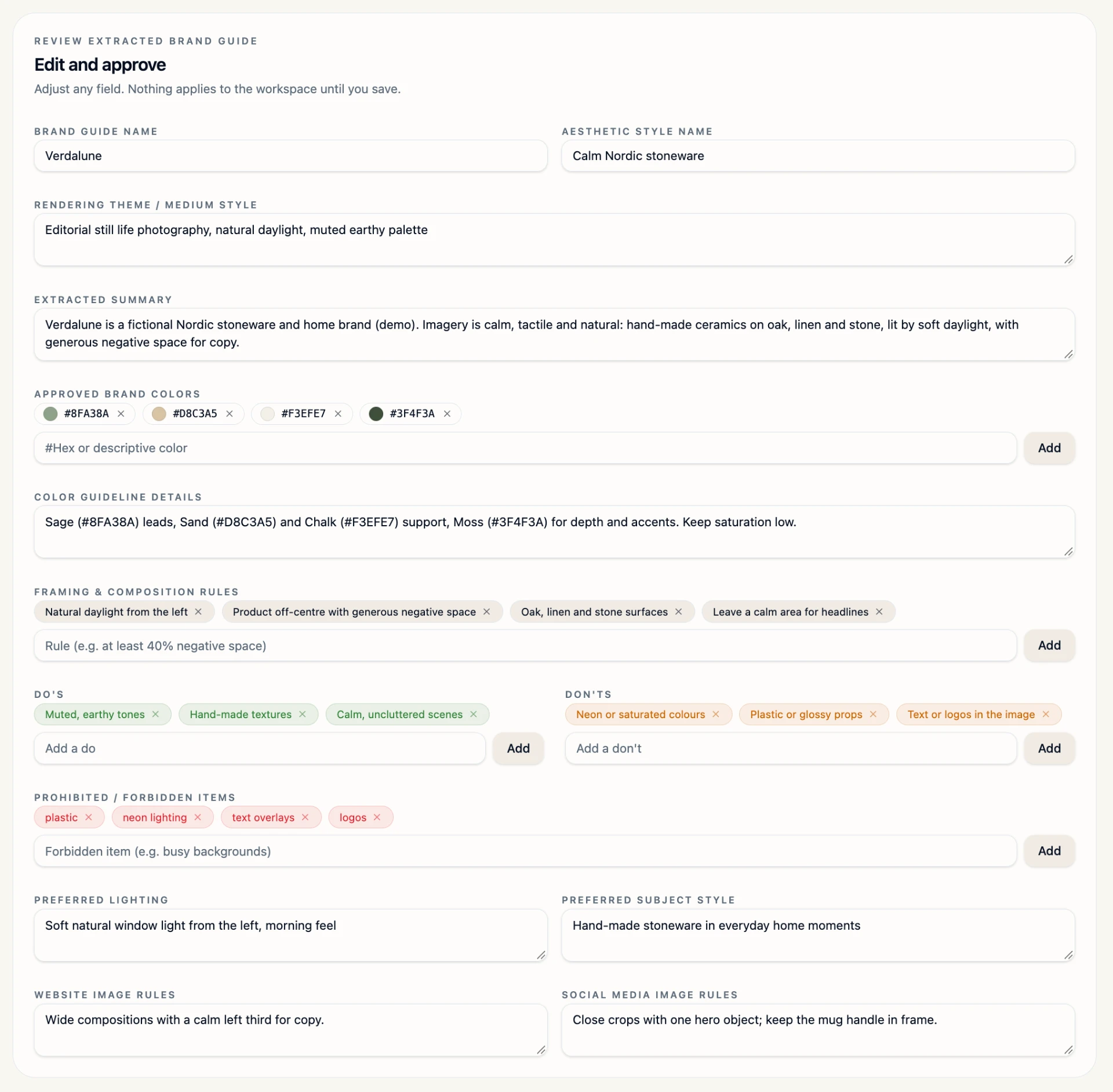
- Approved colours
- The palette from your Brand Guide, including which colour should dominate.
- Visual style
- The overall look your brand uses, such as natural, editorial or minimal.
- Composition
- Placement, negative space and framing rules, adapted to each format.
- Lighting
- For example soft natural daylight rather than harsh studio light.
- Subject style
- How people, products and surroundings should be shown.
- Do and don't rules
- Explicit instructions your brand team has written down.
- Forbidden elements
- Things that must never appear, including AI-drawn logos or text.
The compliance flow
- 1Brand Guide
- 2Image idea
- 3Brand-aware optimisation
- 4Asset brief
- 5Compliance score and warnings
- 6Image generation
- 7Review and refinement
The details of each step are described in how Brand Asset works.
Brand compliance score, warnings and corrections
Each brief gets a brand compliance score. When something conflicts with the Brand Guide, such as an off-palette colour or a forbidden element, Brand Asset shows a warning and a suggested correction so the creator can fix it before generating.
The score is a guide for creators and reviewers, not a replacement for human judgement. Images still go through your company's own approval workflow, and every decision is stored in the audit trail.
Logos are handled separately
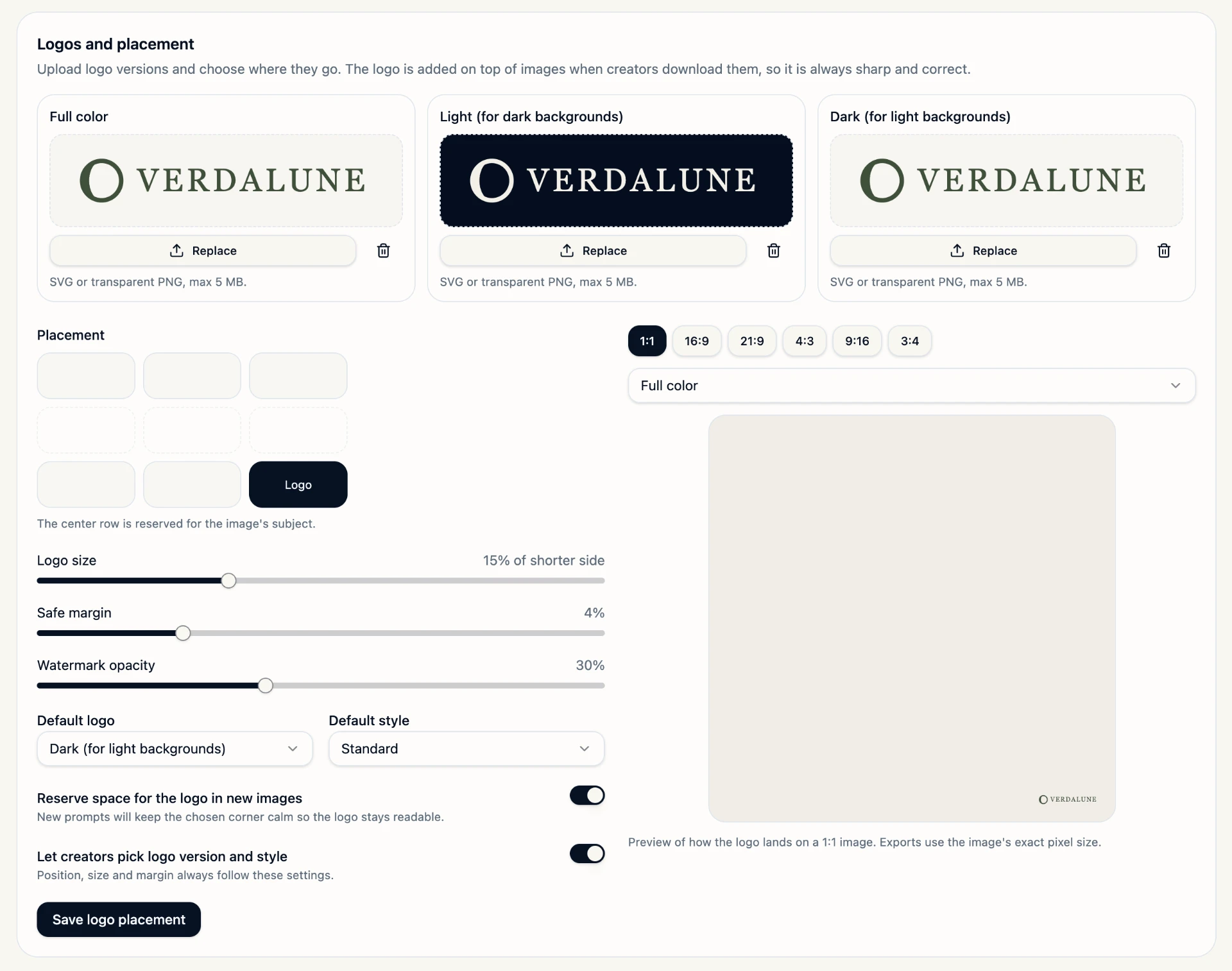
The AI is instructed never to draw logos or text. Your real logo files are placed at export according to the placement rules in your Brand Guide, so the logo is always the correct, approved version.
See how teams put this into practice in Brand Asset for marketing teams.